Tuesday, October 7, 2014

Mook Hit Points

Way back, when I first started playing D&D, I felt that Hit Dice was a bit of a pain to use. Sure it gives you a relative value of toughness (coupled with AC at least) of a "monster," but, unlike AC, it was a variable number, not a static number that was easy to use. So the first thing I did was establish a way to quickly convert Hit Dice to Hit Points for ease of use. The thing is, as any gamer that's been playing for a while probably knows, dice rolls have an average number. For example, the average result of rolling 1d6 is 3.5, 2d6 is 7, 3d6 is 10.5, so on and so forth. (Though, I'll admit, I'm still not entirely up on how the statisticians arrive at those results, I just go with it.) For 1d4 the average result is 2.5, for 1d8 its 4.5, for 1d10 its 5.5, 1d12 is 6.5, 1d20 is 10.5, so on and so forth (it's easy to know once you see the pattern). In our case, Hit Dice are generally represented by 1d8. By knowing the average result (which, in case it isn't obvious, is NOT the same as the average roll), you can immediately establish the average number of hit points for any creature using Hit Dice. Unfortunately, unless you round the average off, most creatures with an odd number of Hit Dice won't end up with a whole number of hit points. So in the case of a 1HD orc, the average would be 3.5 hit points. Following common rounding rules ("round half up" is the term I believe is used) any value of .5 would round up to the nearest whole number, giving the AVERAGE 1HD orc a total of 4 hit points.

So, by following this simple math, you can instantly generate the average hit points for a whole group of monsters without having to roll for each individual one. However, say you want to include some basic variation in your group of monsters, again, without having to roll a whole bunch of dice for each and every individual monster in a group. That's when I started thinking about how to make generically "stronger" or "weaker" individuals without having to roll their specific hit points. So I came up with a semi-simple compromise that lets me (fairly) quickly roll up some variable hit point individuals without just giving them all average hit points.

Kinda Quick Hit Points Determination (Roll 1d6):
Roll Type 1 HD 2 HD 3 HD 4 HD 5 HD 6+ HD
1 Skirmisher Mook hp = 1 hp = 2 hp = 3 hp = 4 hp = 5 hp = #HD
2 Mook hp = 2 hp = 4 hp = 6 hp = 8 hp = 10 hp = #HD + 1 HD
3 Upgraded Mook hp = 3 hp = 6 hp = 9 hp = 12 hp = 15 hp = AVG hp - 1HD
4 Elite Mook hp = 5 hp = 10 hp = 15 hp = 20 hp = 25 hp = AVG hp - 1HD
5 Lieutentant Mook hp = 6 hp = 12 hp = 18 hp = 24 hp = 36 hp = Max hp - 1HD
6 King Mook hp = 8 hp = Max hp hp = Max hp hp = Max hp hp = Max hp hp = Max hp

Notes:
Max hp = Hit Dice x 8.
AVG hp = 4.5 x the number of Hit Dice (rounded up).
#HD = the number of Hit Dice as hit points (i.e. a 7HD creature would have a value of 7).
When adding or subtracting 1HD from the results, this can be any number you choose (or choose to roll), for example, you could add or subtract 1 hp, average hp (5 in this case), or full hp (8) from the hp already determined.
For creatures (like say a creature with 6+1 HD or a creatures with 3-1 HD) just add or subtract the modifier after determining the hit points.

Monday, October 6, 2014

Mutant Monday

Red Tide


No. Enc.: 0 (1d2)
Alignment: Neutral
Movement: 90' (30')
          Swim: 90' (30')
Armor Class: 9
Hit Dice: 5
Attacks: 2 (bite, tail)
Damage: 2d8, 1d8
Save: L2
Morale: 8
Hoard Class: None
XP: 650

These serpentine creatures are a heavily bio-engineered form of Karenia brevis, the dinoflagellate responsible for the "Red Tide" harmful algal bloom found along the Gulf Coast. A Red Tide appears as a reddish or pinkish serpent, approximately 120' long and 12' in diameter. The head appears as a distinctive bulge containing a large mouth and no discernible eyes.

Typically found near the surface of the ocean, attacking prey from behind or underneath, detecting their victims by motion. They may attack with both a bite and a tail slap in 1 round. If a Red Tide’s bite attack roll is at least 4 higher that the roll needed to hit (or a 19 or 20 are rolled), a victim is swallowed. A being that is swallowed takes 3d6 hit points of damage per round inside the Red Tide’s belly. The damage stops when the character dies or the Red Tide is killed.

Red Tides can also use their powerful bodies to create a small, but powerful wave in the water, similar to a tsunami. This wave propagates out to the side of the Red Tide covering an area 60' by 60'. Everyone in that area must make a save versus energy attacks or take 2d6 points of damage and be submerged. Those that save just take 2D6 damage. Against ships and boats the wave does 2d6 shp and has a 80% chance of capsizing a galley-sized or smaller vessel and a 50% chance of capsizing a sailing ship.

Mutations: Abnormal Size (Gigantism), Carnivore, Free Movement

Sargasso Sulfinator


No. Enc.: 1d4
Alignment: Neutral
Movement: None
Armor Class: 9
Hit Dice: 6
Attacks: See below
Damage: 1d8 swat, 2d10 crush
Save: None
Morale: None
Hoard Class: XIX (x2)
XP: 1020

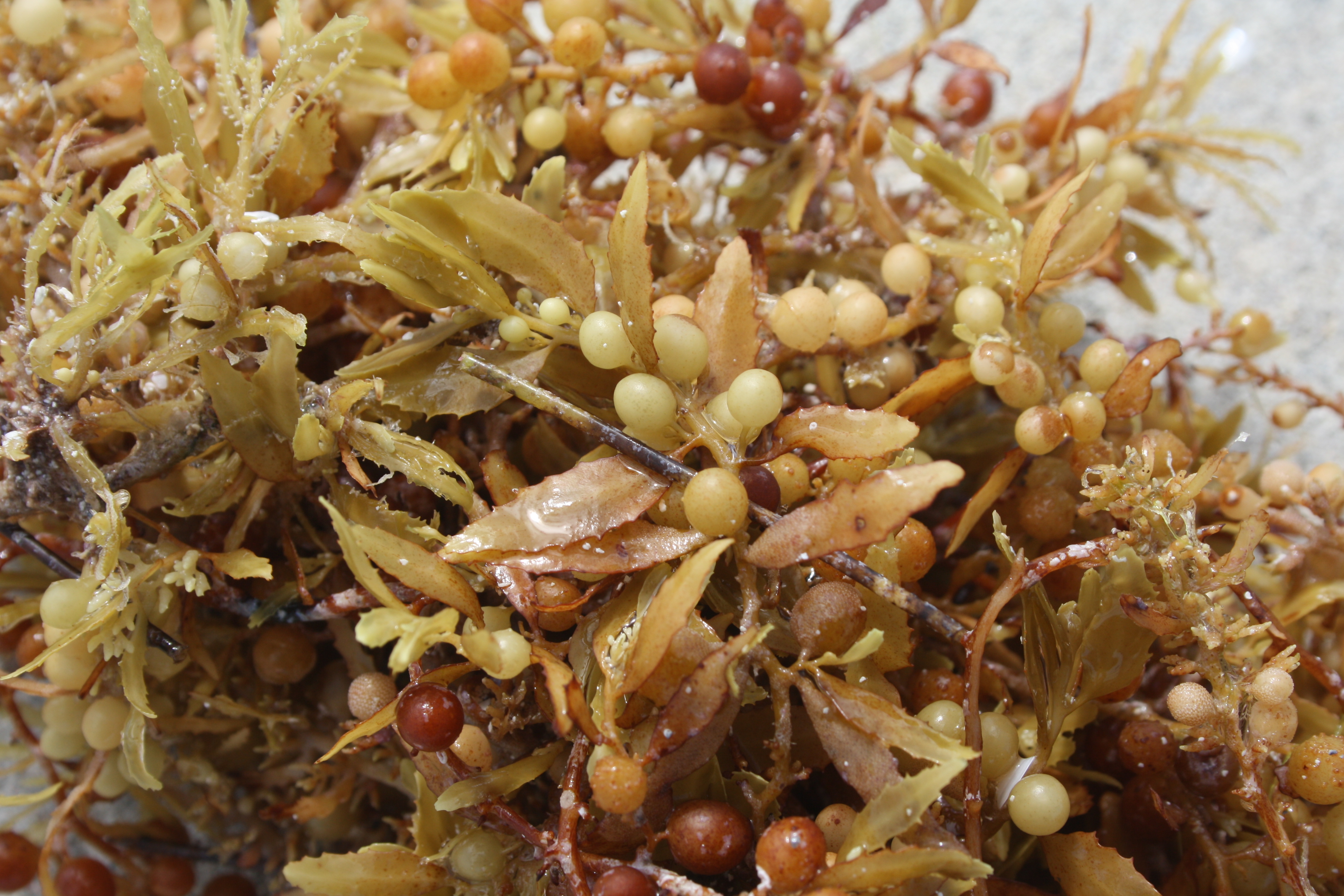
A mutated species of Sargassum seaweed that has evolved into a carnivore. A Sargasso Sulfinator is composed of a collection of 4d6 brown seaweed fronds with grape-like gas-filled bladders surrounding a central core. Appearing as a normal mass of sargasso, 1d20x10' in diameter, floating on the surface. Because of this, beings must make a surprise check roll of 1-3 on 1d6 to notice the danger posed by Sargasso Sulfinators. The mouth of the creature is hidden near the the center of the mass.

When prey approaches, a Sargasso Sulfinator attacks with 1D4 of it's fronds. If prey is hit, the creature will attempt to drag the victim into its huge mouth. It takes two rounds for the victim to reach the mouth, and five rounds later the victim is completely digested by the immensely powerful digestive agents within. Each frond can receive 6 points of cutting damage before being severed; severed fronds regenerate fully in 2d6 days.

In addition to physical attacks, if the creature takes damage, there is a 50% that several gas bladders will be punctured, releasing a toxic cloud of gas (Class 7 poison) in a 30' radius.

Mutations: Toxic Weapon, Prehensile Tendrils (Constrictive), Carnivore

Sirenweed


No. Enc.: 1 (2d4)
Alignment: Neutral
Movement:
          Swim: 120' (40')
Armor Class: 7
Hit Dice: 4
Attacks: 1
Damage: 1d4
Save: L2
Morale: 6
Hoard Class: XXI
XP: 355

Mutated versions of Macrocystis pyrifera, these aquatic creatures can be found lairing among vast seaweed beds among the coasts. About 14 feet in total length, Sirenweeds appear, from the waist up, as green or brown skinned humanoid females, with long, flowing hair. From the waist down, generally underwater where it can't be seen, the body appears as a long sea serpent, with a long narrowing tail, covered in long, delicate fins, and ending in a wide, fan-shaped fluke.

Sirenweeds generally attack by using their Captivate mutation to lure in victims, which they then drag underwater to be drowned and consumed. Against aquatic prey, they instead pummel the victim to death.

Mutations: Animal Limbs, Captivate (new), Carnivore, Free Movement, and Full Senses


NEW MUTATION (Beneficial Mental Mutation)
Captivate
This mutation allows the mutant to produce an invisible field that is enticing to all living creatures. The radius of the field is 50 feet and any creature inside the area of effect must make a save vs. energy or be so enticed will stay as close to the mutant as possible and try to protect it, even to the point of fighting other creatures that draw near. Every 5 rounds anyone enticed by the field may make another saving throw. Until the victim is successful, he will stay near the mutant until he dies from drowning, dehydration, or starvation (whichever comes first).

Wednesday, October 1, 2014

Early Morning Adventure Thoughts

I recall a post on some blog somewhere (though I can't remember where) which discussed the author's use of the module S3 Expedition to the Barrier Peaks in Gamma World games. That got me thinking about reusing other old modules in post apocalyptic games. So I decided to look at several old D&D/AD&D modules and see if I could "convert" them into something fitting in a post apocalyptic setting. In no particular order:

DL1 Dragons of Despair - Yes, I know, many people dislike this series because of it's railroad nature, however, throwing away the rest of the series and just using the basic themes, ideas, and areas of this module, with some modification strikes me as being playable. Afterall, it's not like the setting isn't post apocalyptic when you come right down to it. However, let's look at some ways to tweak this module into something useable for a PA game set in a post apocalyptic Earth. First let's change the regional map of the Solace Region. Ironically, there don't need to be as many changes as one might think. First rotate the map 180 degrees so that "Qualinesti" is in the north. Doing this gives us a map of a region with a major forest to the north, plains to the south (south west, but go with it), sea and swamp beyond the plains and a small mountain range, and towering mountains to the east. Well I can think of a place in North America that fits that description well enough to be used, Washington State (more or less), heck you could even probably use California or Oregon if you really wanted to, come to think of it, you could probably use the state of New York as well (and those are all from the USA). So now you've got a PA region of Earth to work with, the rest follows without much in the way of major changes. Solace represents a post apocalyptic community living among giant mutated trees, Qualinesti (though it doesn't come much into play in this module) as a forest of forest-dwelling mutants, the Darken Wood as a mutated forest full of fey mutants and possibly robot remnants from the apocalypse, Haven as a pure human safehold (or possibly dome city), the Plains of Abanasinia as grasslands or wastelands full of nomadic tribals (being attacked by armies of whatever villainous mutant species you care to make the antagonist), and the swamp and Xak Tsaroth as whatever major sunken city you want to use (such as Seattle, Tacoma, Portland, Oakland, Los Angeles, San Diego, Albany, etc.). Now change the major macguffin from the Disks of Mishakal into something more technological, like say Microsoft Operating System discs and you're pretty much good to go. Mutants, tribals, pure human techs, ancient robots (kiss gully dwarves goodbye, say hello to Roomba ver 12.6), lost technology, ancient ruins (and cool ones at that), what's not to love?

B2 Keep on the Borderlands - This one should be a no-brainer to convert. Post Apocalyptic survivalist/militia group compound and nearby small town ruins (the titular "Caves of Chaos"...though these could also be mines, an old military research facility, experimental geofront, or even regular caves). A couple of basic things of note though. One the rumor table would have to be slightly reworked, though not by much. For example, the "merchant" could be a water merchant, wandering wasteland merchant, ammunition merchant, arms merchant, etc. The "powerful magic-user" could become a psychic, robot, cyborg, or some other powerful menace. The magic wand could be a firearm or energy weapon. Altars could become some electronic device (televisions or music speakers for instance). "Piles of magic armor" could become power armor. The rest of the humanoid specific rumors could easily be modified (although "dog-men" and lizard-men really need no change) into humanoids from Mutant Future, goblins becoming Higher Baboons, bugbears becoming Pumpkin Men, the ogre becoming a Goliath, the elf becoming an Eloi, and of course, orcs becoming Pigmen. Kobolds could be Cockroahoids, Hobgoblins becoming Morlocks, the Minotaur could be a mutant cow or bison, the gnolls could be medusoids, etc. Of course, it should be obvious that references to magic items should change to technological items, with magical armor becoming advanced armor, magical weapons becoming either advanced melee weapons, or, more likely, firearms and energy weapons (though I think energy weapons are better represented by magic wands/rods/staves). Scrolls could be power sources or explosives, potions would likely be variuos chems and medical items, rings and miscellaneous magic as "Gizmos", etc.

X1 The Isle of Dread - One of my personal favorites (and I think, slightly better done than WG6 Isle of the Ape though I don't think it's difficult to combine the two modules to get the added King Kong effect of giant carnivorous apes fighting dinosaurs). This one is fairly easy if you want to have your own post apocalyptic Jurassic Park thing going. Heck, just replace the Kopru with psychic fishmen, brain lashaers, or humanoid masses, the aranea with spidergoats, the rakasta with catmen of your choice, and phanatons with mutant gliding mammal (such as a flying squirrel, colugo, galago, flying lemur, or greater glider) and you're set. (allowing for the magic item substitutions noted above.)

B4 The Lost City - Another favorite module of mine. This one requires a bit more work to convert than some of the others, but I think concepts of arcologies, dome cities, geofronts, hyper towers and so forth, combined with the typically common post apocalyptic desert wasteland makes for a lot of playability. For an interesting twist, change the three Cyndicean cults into Christianity, Judaism, and Islam (or cargo cult/debased versions thereof, making as many changes as you see fit to avoid offending people) and the cult of Zargon a Cthulhu type cult (no real change there), add in some 60s psychedilic drug culture, and go gonzo with it.

FRC1 Ruins of Adventure - Another easy to convert module of great utility. Clear out the ruins of some ancient city so it can thrive again. Slums, no problem, choose your poison, raider gangs or mutants (or both). Sokol Keep, go robots/cyborgs or fishmen (or some other aquatic humanoid mutant). Kudo's Well, easily a major raider band controlling a fresh supply of water. Podal Plaza provides tons of fun, with an auction, temples (to whatever cults you want), and a "raider" bar for all your bar brawl needs. The Textile House gives us mutant humanoids and political intrigue. Mendor's Library can easily be used for knowledge recovery quests. Kovel Mansion provides plenty of loot caches and thieves. The Wealthy District has some mutant dark cult foes. The Temple of Bane is obviously the HQ of a cryptic alliance or mutant dark cult. Valhingen Graveyard gives you your zombiepocalypse fix (personally, I'd throw some other undead type critters or pseudo-undead in there as well...nothing says vampire like a blood drinking mutant cannibal...though I gotta admit, incorporeal undead are a harder sell in a PA setting). Stojanow Gate is where some serious decisions have to be made. After all, depending on what you chose for the Big Bad, you'll have to figure out what minions you want. As a simple exercise, let's say the Bane "faction" is a mutant death cult (regardless of what you chose for the Temple of Bane block of the city), the giants are Goliaths and Medusoids, mages are brain lashers, the false Tyranthaxus is a skin stealer, and the gnolls and trolls are pumpkin-men and vile slashers respectively. Of course the hedge maze is also populated by various killer plants. For a change of pace, switch around the city blocks so they are in different locations than on the map.
The Wilderness outside of Phlan also provides lots of utility. They Pyramid is obviously the lair of a mad scientist or robot factory. The dragon could be a pro-restorationist AI. The Kobold Camp, Buccaneers, and Nomad Camp are all pretty easy to convert. Zhentil Keep can easily be a mutant supremacist or pure human supramicist stronghold.

FRC2 Curse of the Azure Bonds - Another module that requires quite a bit of conversion. Mostly in deciding what five factions (i.e. cryptic alliances) you want to harrass your characters. Given that most Cryptic Alliances have vastly differing goals, I recommend using an expanded selection of cryptic alliances/post apocalyptic cults such as Gamma Cryptic Alliances to give you a lot more useable options. Personally, in keeping with the basic theme of the module, I recommend a raider band to represent the Fire Knives, a robot or cyborg cryptic alliance to represent the Red Wizard, a mutant plant PA cult to represent Moander, pure human supremacists to represent Zhentil Keep, and a mutant supremacist for Tyranthraxus. (Obviously each faction has its own goals, and they all think they are using the others for their own ends, which means plenty of opportunities for backstabbing and betrayals.) The main problem here is how to replicate the "magical" Azure Bonds themselves. I think that while some form of psychic control is possible, it's not very likely given my suggested usage of pure humans and robot/cyborgs. Nanotechnology or some sort of Snake Plisken virus might do the trick, also bio-engineered parasite/symbiote would also work, or computer chip implant controls (for example, the type from Terminator Salvation). Better yet, a combination of all of the above, each requiring a different method of removal would be a particularly fun trick. Lastly, the problem exists in just what the goal of each of these factions is.

I1 Dwellers of the Forbidden City - Obviously a no-brainer, heck you could probably keep the monsters as is for the most part, and just make each section of the city that they control the focus of some pre-apocalypse loot cache such as a national guard armory, police station, hardware store, library, computer center, supermarket, hospital, etc. to determine what kind of loot would be scavenge-worthy. I suppose that the ruined city could either be the result of an earthquake, sinkhole, sunken dome city/arcology, or geofront if you really wanted to.

Monday, September 29, 2014

Mutant Monday

Drooling Death


No. Enc.: 1d6 (1d6)
Alignment: None
Movement: None
Armor Class: 4
Hit Dice: 5
Attacks: 1
Damage: poison
Save: L2
Morale: None
Hoard Class: None
XP: 500

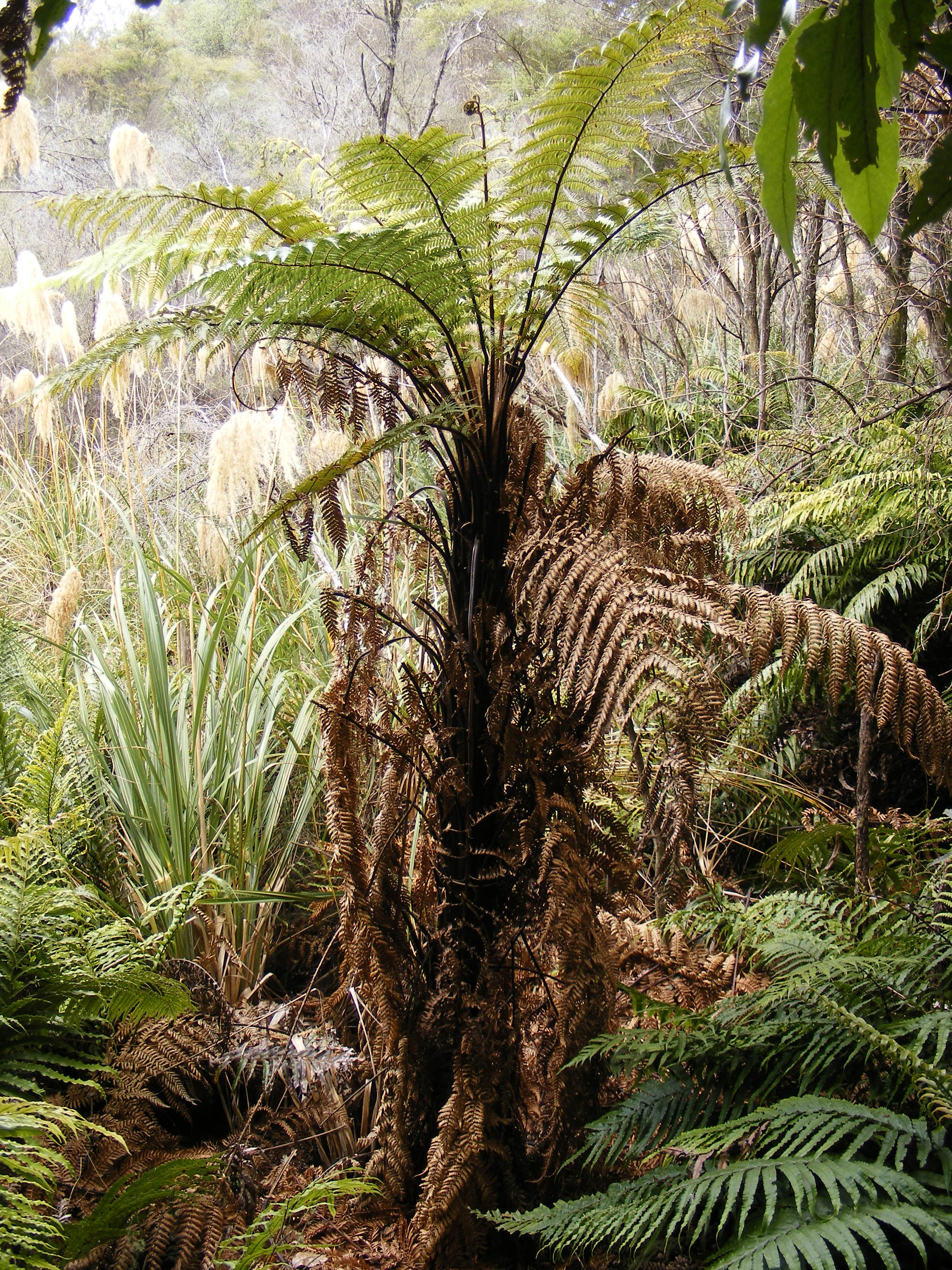
Drooling Death are mutated Dicksonia squarrosa fern trees, standing about 20 feet tall. Their fronds form an "umbrella" at the top of the plant, covering an eight to ten foot radius. Their roots have mutated to obtain nourishment from animal and humanoid bodies.

A bane to unwary forest travelers, these ferns attack by dripping a Class 19 poison sap onto those unwary enough to walk under their fronds.

Mutations: Extreme Natural Armor (Plant), Toxic Weapon (Class 19 poison)

Monday, September 22, 2014

Mutant Monday


Bristly Haircap


No. Enc.: 1(1)
Alignment: None
Movement: None
Armor Class: See below
Hit Dice: 1D6
Attacks: See below
Damage: See below
Save: None
Morale: None
Hoard Class: XIX
XP: 1 HD: 22
        2HD: 56
        3HD: 110
        4HD: 300
        5HD: 800
        6HD: 1320


This plant is a mutated Polytrichum commune (haircap moss) that has been bio-engineered as an area denial weapon. It appears as a large, dark green moss in the form of many-branched caltrops scattered densely over the surface of the ground. Found in rainy or humid temperate regions, a patch of Bristly Haircap has a radius in feet equal to Hit Dice x 100. The hadrom (water conducting tissue) of these plants has also been modified to absorb iron rich blood in addition to water, further strengthening the alloy of the leaves, though providing no nourishment per se to the rest of the plant. The photosynthetic lamellar of the plant are only slightly modified, trapping and retaining moisture and blood efficiently, but otherwise providing little protection to the plant.

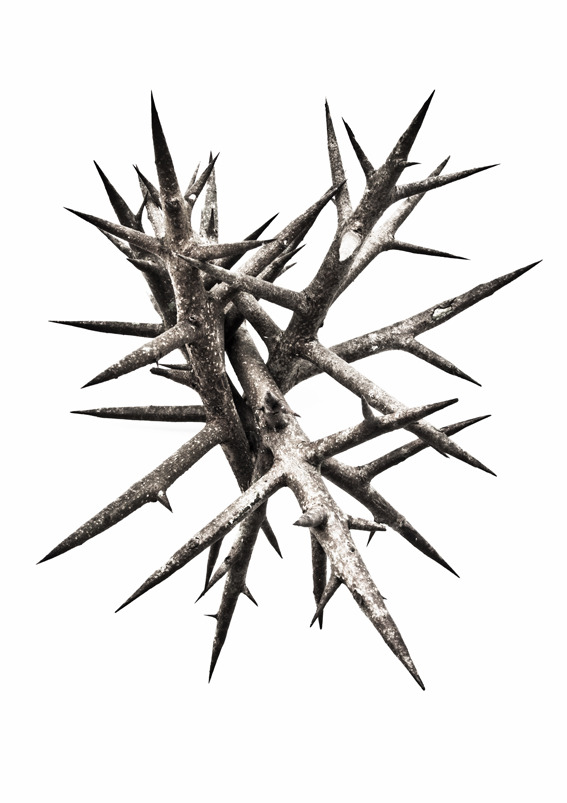
The caltrop-like feature of Bristly Haircap has been heavily modified, replacing the soft, plant-like original material with a shiny, golden monomolecular metallo-crystal iron alloy, while retaining the shape of the original toothed lanceolate blade leaves. Additionally, the leaves and structure of the plant have been modified to make them into hypodermic injectors linked to a gene-engineered poison sac. When stepped upon, these leaves penetrate any material that they come into contact with, including metals, but not stone or rock. A creature walking through a patch will encounter 2d6 such leaves, each doing 1d4 damage and injecting a Class 12 poison into the target.

With the exception of the metallic glint of promised gold among a field of green moss, which often attract the attention of victims with more greed than sense, Bristly Haircap appears to be a field of normal moss. Because of their unremarkable nature, beings must make a surprise check roll of 1-3 on 1d6 to notice the danger posed by patches of Bristly Haircap. A patch of Bristly Haircap cannot be destroyed except by fire or by careful digging and removal from the soil it covers. Some primitive tribals and mutants cultivate patches of Bristly Haircap as defensive fields.

Mutations: Injected Poison Sap, Natural Vegetal Weapons, Metallic Bark (CotW), Thermal Sensitivity (heat/fire)

Monday, September 15, 2014

Mutant Monday

Ketos


No. Enc.: 1(1)
Alignment: Chaotic
Movement: 30' (10')
          Swim: 180' (60')
Armor Class: 1
Hit Dice: 10
Attacks: 5 (4 claws, 1 bite)
Damage: 1d8/1d8/1d8/1d8 or 4d8
Save: L10
Morale: 20
Hoard Class: XV
XP: 5200

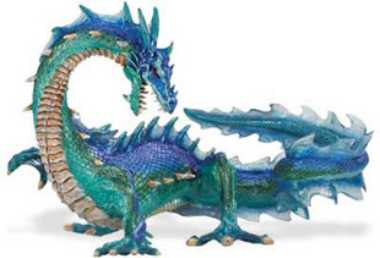
The Ketos, or Fish-Dragon, is an ocean dwelling monstrosity that preys on ships and coastal regions. Appearing as a 60' to 80' long blue-gray muscular, shark-like reptile out of nightmare, it's body consists of an elongated lizard-scaled serpentine shape, with shark-like anal, caudal, dorsal and pelvic fins along the serpentine tail. There are eight other limbs; four powerful lizard like arms with webbed claws near the head of the beast, and two sets of whale-like flippers behind them. A horned dragon's head with shark teeth and a black forked tongue is used to bite large prey and swallow smaller prey whole.

Fish-Dragons are capable of breathing air and water, and can operate in a limited fashion on land, though, if forced to retreat, they will often head toward the nearest body of water. When attacking at sea they prefer to capsize boats and ships. To determine the chance of capsizing a vessel, divide the Ketos's size by the size of the ship. For instance, a 75' Ketos attacks a 150' long sailing ship has a 50% chance of success. The chance of success never exceeds 95%, in other words, any vessel that is the same size as or smaller than the Fish-Dragon has a 95% chance of being capsized. Any sailors unlucky enough to be dumped into the water will then be attacked. If their attack roll is equal to or greater than 18, the poor sailor is swallowed. A being that is swallowed takes 2d6 hit points of damage per round inside the Ketos’s belly. In addition, if a victim does not succeed in a saving throw versus paralyze, he is paralyzed with class 10 poison. Otherwise, he may attack the Ketos from the inside with a –4 to the attack roll versus an effective AC 7. Any other prey killed will be dragged back to the Ketos's lair for later consumption.

Dominating an area of a few hundred square miles of ocean, these aquatic carnivores generally lair is large underwater caves, occasionally being found in ship graveyards or large underwater habitats, such as pre-apocalypse dome cities. Those Fish-Dragons located near coastal area have been known to attack coastal communities by crawling onto land and "going to town."

Mutations: Echolocation, Night Vision, Reflective Epidermis (Cold), Regenerative Capability, Dietary Requirement Change (Carrion) [from Creatures of the Tropical Wastes], Epidermal Dependence (Water) [from Creatures of the Tropical Wastes].

Monday, September 8, 2014

K is for Kuru (the effects of cannibalism in post apocalyptia)

Kuru

Save Modifier: -1, cumulative (with each consumption of an infected target)
Infection Duration: 6 months
Affected Stats: STR -1, DEX -2 (First Stage)
Damage per day: See Symptons below

This common post apocalyptic disease, more widely known as The Shakes, but also known as The Laughing Sickness is widely reviled throughout the wasteland. The problem is that this disease can generally only be contracted through cannibalism. This disease is caused by prions found in humans (and any other primate species, that is monkeys, apes, gorillas, orangutans, monkeys, chimpanzees, etc.), though several mutant animal species have their own variant. In bovine races (cows, bison, buffalo, water buffalo, yaks, and certain types of antelopes) it is known as Mad Cow Disease. Among sheep and goats it is known as Scrapie. The cervid species (deer, elk, moose, etc.) have Chronic Wasting Disease. Felines, Minks, Ostriches, and Grazing Antelopes (a bovine sub-family) all have some variant of Transmissible Spongiform Encephalopathy. There is no save modifier when consuming an infected cross-family (i.e. primates are all one family, bovines are all one family, cervids are all one family etc.) meal.
Symptoms: First Stage: unsteady stance & gait, decreased muscle control, tremors, and slurred speech.
Second Stage: (occurs after 10 consecutive failed saving throws against Infection Duration) incapable of walking without support, loss of muscle coordination (DEX is halved), severe tremors, depression, and bouts of uncontrollable laughing.
Third (Terminal) Stage: (occurs after 12 consecutive failed saving throws against Infection Duration of Second Stage Symptoms) no muscle coordination (DEX is equal to a value of 1), unable to speak, difficulty swallowing, incontinence, and becomes ulcerated (as if infected by Flesh Eating Bacteria). Death usually occurs between three months and two years once this stage is reached.

Mutant Monday


Porphyric-blooming Cereus


No. Enc.: 1d10 (1d10)
Alignment: Neutral
Movement: None
Armor Class: 7
Hit Dice: 2
Attacks: 2-5 (1d4+1)(projectile spines)
Damage: 1d4+special
Save: L1
Morale: None
Hoard Class: VI
XP: 29

Also known as the Blood-Bloom Cactus, this mutated version of Hylocereus undatus is a profusely branched climbing vining cactus, bearing largish (about a foot in diameter) white-colored flowers, and white oval fruit. The flowers and fruit darken to a beautiful crimson when the cactus has fed.

The preferred method of attack for a Porphyric-blooming Cereus is to wait until its prey is within a few feet, then quickly extend 2-5 spines with a range of 30 feet. Each spine that hits inflicts 1d4 points of damage. Each tendril that hits absorbs 1d6 hp of blood each round it is attached. It has a maximum capacity of 100 hp worth of blood, or as much as 10 pints. It swells to allow the fluid to be stored. The Porphyric-blooming Cereus gains half the damage done back in hit points. A cactus that is feeding does not attack again until it is dislodged.

A Porphyric-blooming Cereus is interested only in food. If it finds it has attached itself to something that doesn't have blood, it normally lets go and drops to the ground. It continues to fight only in self-defense. Blood-Bloom Cacti are found all over the wasteland in small clumps of as many as ten plants. They are non-ambulatory and so have no territory. While they have no treasure in and of themselves, the occasional victim will leave behind some trinkets.

Mutations: Projectile Vines (Fluid Leech)


NEW MUTATION (Beneficial Plant Mutation)
Projectile Vines
The plant has a network of modified vines that can be shot out to 30 feet for small plants, 60 feet for humanoid-sized plants, and 100 feet for large or huge plants. If the plant has sensory capabilities it is also assumed to have the intelligence to direct these modified vines; otherwise, the vines spread out 360˚. To determine the exact type of projectile, roll 1d6 and consult the chart below.
Roll Type Effect
1 Poison Vines - Plant has a network of 3d4 vines dotted with sharp thorns coated with poison (with a type randomly determined upon creation).
2 Sucker Vines - The plant has 4d6 vines edged with suckers that affix themselves to a victim on a successful hit. Each vine does 1d6 damage each action round it is attached to a victim, (on the second round, not the first). All hit points drained from the victim are added to the plants score. A successful grapple check must be made each round to continue to drain the victim. Sucker vines release their victim when their plant or the victim is killed.
3 Harpoon Vines - The plant has 2d6 hardened spear-like vines they can launch at targets, up to the plants total number of harpoons. Each spear does 1d8 damage plus strength modifier. An attack roll of 19 or 20 means the victim has been impaled by a harpoon for double damage. If the plant fails to impale, it retracts the harpoons and fires again the next round. When a victim has been successfully impaled, the plant retracts the harpoon, which pulls the victim to the plant.
4 Energy Leech Vines - The plant has 3d4 vines that will drain 1d6 charges (or equivalent) from any energy item it comes in contact with on a successful hit. The plant gains 1 hit point back from every charge drained. A successful grapple roll is required to maintain contact each round.
5 Fluid Leech Vines - The plant has 3d6 vines that will drain 1d6 hit points from any creature they come in contact with. The plant gains half the damage done back in hit points. A successful grapple roll is required to maintain contact each round.
6 GM’s Choice - The GM may choose any type of vine, combination of vines, or create his own type of vine.

Monday, September 1, 2014

Mutant Monday Labor Day Bonus Edition

Dire Bamboo


No. Enc.: 2d6 (2d8)
Alignment: Neutral
Movement: 120’ (40’)
Armor Class: 3
Hit Dice: 4
Attacks: 1 (bite)
Damage: 1d8
Save: L2
Morale: 11
Hoard Class: None
XP: 245

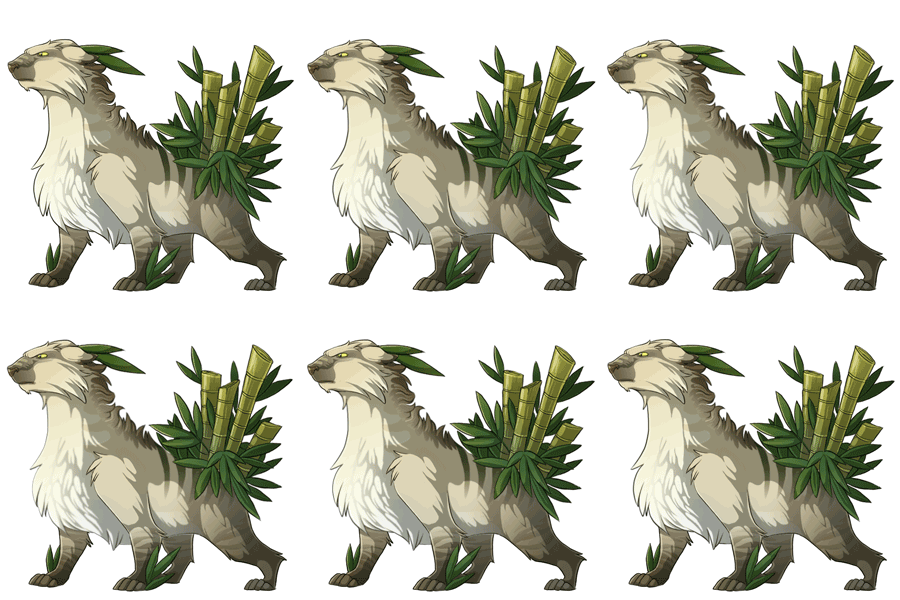
This mutated bamboo appears as a long-bodied, almost weaselish creature with four powerful, panther-like legs, and a long tail. They have relatively smooth, bark-like skin that ranges in coloration from green to tan or whitish-grey, covered in a thin fur of green, sword-like leaves.

Dire Bamboo hunt in packs and prefer small prey over the larger variety, because of the amount of energy required to run them down. Even then, they catch only the weak and sickly animals. They usually hunt only one large quarry per week, per pack, going without food for days at a time.

Dire Bamboo can often be found in moist woodlands and marshlands. They are often associated with Bryophytians

Mutations: Carnivore, Free Movement, Full Senses

Mutant Monday

Bryophytian

No. Enc.: 6-24 (30-300)
Alignment: Neutral
Movement: 60' (20')
Armor Class: 4
Hit Dice: 1 to 6
Attacks: 1
Damage: 1d4 or weapon type
Save: L1 to L6
Morale: 8
Hoard Class: I, II
XP: 1 HD: 22
        2HD: 56
        3HD: 110
        4HD: 300
        5HD: 800
        6HD: 1320


Bryophytians, also known as mossmen, are short, bipedal moss creatures. They appear as furry or fuzzy humanoids with rounded, often bulging proportions. Coloration is generally greenish, except when the Bryophytian becomes dehydrated, then it turns to a pale whitish green or light blue-green. Mossmen are 1½ feet tall, plus ½-foot per Hit Die. Although they do not have a spoken language, they are capable of vocalized cries. They normally communicate by tapping on their chests and on trees or stones.

Parties of Bryophytians hunt near their lairs. In their home territory, mossmen blend into their surroundings, so opponents receive a -2 penalty to surprise rolls. Bryophytians will attack any form of animal life for food. Timid and cunning, mossmen will not only use their natural camouflage for ambush, they will also use other tricks or traps, preferring snares, pit traps, and deadfalls. Half of the mossmen in a group have 1 HD, while 25% have 2 HD. The rest are 3 or 4 HD (equal chances). For every 50 Bryophytians, there is a subchief with 5 HD and 1d4+1 bodyguards with 3 HD each. Each tribe of mossmen is led by a chief with 6 HD and 2d4 bodyguards with 4 HD each. Half of the Bryophytians encountered carry spears, while the others use clubs or go without weapons (equal chances). About half of all of their hunting parties are accompanied by a pack of Dire Bamboo as well. Mossmen settlements always hold 1-4 packs of Dire Bamboo.

Bryophytians form primitive, settled tribes. Mossmen live by scavenging and hunting. Their lairs are usually found in moist woodlands or marshes. Tribes are territorial. Bryophytians co-exist well with plant and fungus life. They often use Screech Bushes to guard their lairs, and mossmen native to the lair can pass by those Screech Bushes unnoticed.

Mutations: Abnormal Size, Carnivore, Free Movement, Full Senses