Showing posts with label Plant. Show all posts

Thursday, July 21, 2016

(My) Post Apocalyptic Races

Racial Tables
This is somewhat of a work in progress.

Table 1: Beastmen and Plants
These tables are for basic animal or plant stock of animal and plant mutants. I use the term "Beastmen" for animal mutants, but haven't decided on a term for mutant plants yet.I think these tables cover the most interesting and common species that a player would want to play, but if there's anything I missed, let me know. Some entries have two or three species because they are close enough that the stats would be the same (Tupelo trees are listed with alternate names, since they have a wide variety of common usages). Songbirds have a subtable because all of there stats would essentially be the same, though I split out the corvids. (Might use Hickory, Cottonwood, Mahogany, Mesquite, Tamarack (a Gygax favorite?), Hazelnut, Witchhazel in plants.)
Another Note for this table, there are no insect or saurian (dinosaur age critters - a more general term than "dinosaur" that includes stuff like dimetrodons and plesiosaurs and so forth) beastmen, mostly because A) there are already enough general animals to fill the table, and B) I'm more likely to use mutant versions of these as non-humanoid mutants (though since I also want to include Extraterrestrial Aliens, there's some room to play with humanoid insects and saurians).
Roll Beastmen 1 (Land/Amphib) Beastmen 2 (Air/Sea) Plants 1 Plants 2
01 Aardvark Albatrosse Agaric (mushroom) Manchineel
02 Agama/Frilled Lizard Anchovy Alder Mandrake
03 Alligator/Crocodile Angler Fish Aloe Mangrove
04 Anteater Barracuda Apple Maple
05 Anole Bass Apricot Marigold
06 Antelope Bat Ash Milk Cap (mushroom)
07 Armadillo Betta Ashitaba Millet
08 Axolotl Blue Whale Azalea Mistletoe
09 Baboon Bull Shark Balsa Mold
10 Badger Candiru Bamboo Monkshood
11 Bandicoot Carp Baobab Morel (mushroom)
12 Basilisk/Jesus Lizard Catfish Barrel Cactus Morning Glory
13 Beaver Chicken/Turkey Beaver-tail Cactus Moss
14 Black/Brown Bear Clownfish Beech Mugwort
15 Boa Constrictor Cod Beet Myrrh
16 Boar Condor Begonia Night-Blooming Cactus
17 Camel Conger Eel Belladonna Nightshade
18 Cape Buffalo Cookie Cutter Shark Birch Oak
19 Capybara/Guinea Pig* Crab Birthwort Oleander
20 Chameleon Crane Blackberry Onion
21 Cheetah Crow/Raven Bladderwort Orange/Tangerine
22 Chimpanzee Dolphin/Porpose Bluegrass Orchid
23 Capuchin Monkey Dove/Pigeon Bolete (mushroom) Pea
24 Cougar/Puma Dragonfish Bottle Gourd Pear
25 Cow Duck/Goose/Swan Bracket Fungus Pennyroyal
26 Coyote Eagle Braken Fern Peony
27 Deer Electric Eel Brown Algae (Kelp) Peppermint
28 Dog Falcon Buttercup Peyote
29 Donkey/Mule Fangtooth Fish Butterwort Pincushion Cactus
30 Elapid Snake** Flamingo Cabbage Pine
31 Elephant Flying Fish Calabash Pitcher Plant
32 Ferret*** Frilled Shark Camphor Poison Ivy
33 Flying Squirrel Gar Cannabis Poison Sumac
34 Fox Goblin Shark Cantaloupe Polypore (mushroom)
35 Frog Goldfish Cardon Cactus Poplar
36 Gazelle Great White Shark Carnation Poppy
37 Gecko Grouper Carrot Potato
38 Gerbil/Hamster Gull Catnip Prickly Pear Cactus
39 Gibbon Haddock Cauliflowe Primrose
40 Gila Monster/Beaded Lizard Halibut Cedar Puffball (mushroom)
41 Giraffe Hammerhead Shark Celery Pumpkin
42 Goat Hawk Cherry Radish
43 Gopher Hermit Crab Chestnut Raffia Palm
44 Gorilla Herring Cholla Cactus Rafflesia
45 Hedgehog Horseshoe Crab Chrysanthemum Raspberry
46 Hippopotamus Hummingbird Clover Red Algae
47 Horse/Zebra Jay/Magpie Cobra Lily Redwood
48 House Cat Lamprey Coconut Rhododendronb
49 Howler/Spider Monkey Lionfish Common Ivy Rhubarb
50 Hyena Lobster Coral Fungus Rice
51 Iguana Mackerel Corpse Flower Rose
52 Jackal Mako Shark Crabgrass Rowan
53 Jaguar Malrin Cranberry Royal Fern
54 Kangaroo/Wallaby Manatee/Dugong Cucumber Royal Palm
55 Koala Moray Eel Cup Fungus Rush
56 Leopard Narwhal Cycad Russula (mushroom)
57 Lion Octopus Cypress Rutabaga
58 Llama/Alpaca Orca/Killer Whale Daffodil Rye
59 Mole Osprey Daisy Sac Fungus
60 Macaque Ostrich Dandelion Saguaro
61 Meerkat/Mongoose Owl Date Palm Sedge
62 Mole Parrot Delphinium Sequoia
63 Mole Rat Peafowl Dragon’s Blood Spinach
64 Monitor Lizard/Komodo Dragon Pelican Elm Spruce
65 Moose/Elk Penguin Fan Palm Squash
66 Newt Perch Fig St. John’s Wort
67 Opossum Piranha Fir Stinging Nettle
68 Orangutan Puffer Fish Foxglove Stinkhorn (mushroom)
69 Otter Puffin Frankincense Straw
70 Panda Ray/Skate Garlic Strawberry
71 Pig/Hog Reef Shark Geranium Strychnine
72 Playtpus Roadrunner/Cuckoo Ginkgo Sugar Cane
73 Polar Bear Rockfish Grape Sundew
74 Porcupine Sailfish Green Algae (Seaweed) Sunflaower
75 Pronghorn Salmon Green Bean Sword Fern
76 Python Sardine Hawthorn Sycamore
77 Rabbit/Hare Sawfish Hedgehog Cactus Tansy
78 Racoon Sea Horse/Sea Dragon Hemlock Tea
79 Racoon Dog/Tanuki Sea Lion Henbane Thatch
80 Rat/Mouse Seal Hibiscus Thistle
81 Reindeer Shrimp/Crayfish/Prawn Holly Toadstool (mushroom)
82 Rhinoceros Song Bird* Honeysuckle Tobacco
83 Salamander Sperm Whale Huckleberry Tomato
84 Sheep Squid Hydrangea Truffle
85 Skunk Starfish Iris Tulip
86 Sloth Stork/Ibis Jasmine Tumble Weed
87 Squirrel/Chipmunk Sturgeon Jelly Fungus Tupelo/Black Gum/Pepperidge
88 Tasmanian Devil Sun Fish Jujube Turnip
89 Tiger Swordfish Juniper Venus Flytrap
90 Toad Thresher Shark Kudzu Violet
91 Tuatara Tiger Shark Larch Walnut
92 Turtle/Tortoise Toucan Larkspur Water Hyancinth
93 Viper**** Trout Laurel Watermelon
94 Warthog Tuna Leek Webcap (mushroom)
95 Weasel/Honey Badger/Polecat Vampire Bat Lemon/Lime Wheat
96 Wildebeest Vampire Squid Lichen Willow
97 Wolf Vulture Lily Wisteria
98 Wolverine Walrus Lotus Wolfsbane
99 Wombat Whale Shark Magnolia Yew
00 Yak Woodpecker Maize/Corn Yucca
* Capybara/Guinea Pig also includes the otherCaviomorpha rodents, such as Agoutis, Chinchillas, Coypu, Hutias, New World Porcupines, and Spiny Rats.
** Elapid Snakes include Australian Copperheads, Cobras, Coral Snakes, Death Adders, King Cobras, Kraits, Mambas, Mudsnakes, Sea Snakes, Swamp Snakes, Taipans, Tiger Snakes, Tree Cobras, Water Cobras, and a bunch of other poisonous Australian snakes. I'm also going to have to stuff the Typical Snake entry in here, since the "garbage bin family" of snakes, (some of which, such as Boomslangs, Keel Snakes, Twig Snakes, and Yamakagashi, are poisonous) are closely related to Elapids.
*** Ferrets include Fishers, Martens, Minks, Sables, and Stoats (Ermines).
**** Vipers include American Copperheads, Bush Vipers, Bushmasters, Cottonmouths, Habu, Horned Vipers, Lanceheads, Mamushi, Moccasins, Night Adders, Pit Vipers, Puff Adders, Sidewinders, Temple Vipers.

Table 2: Songbird Subtype
Roll Songbird
01 Blackbird
02 Bluebird
03 Cardinal
04 Catbird
05 Chickadee
06 Finch
07 Jay
08 Lark
09 Martin
10 Mockingbird
11 Oriole
12 Shrike
13 Sparrow
14 Starling
15 Swallow
16 Thresh
17 Tit/Titmouse
18 Wagtail
19 Warbler
20 Wren

Table 3: Humanoid Robots, Robots, Mutant Humans
I use some different terms for robots, though I haven't completely codified my usage. Cyborgs should be fairly obvious. Androids represent humanoid robots built to look like real humans whereas Droids are obviously robotic humanoids. Soft & Hard Holograms are pretty much from Mutant Crawl Classics. For non-humanoid robots, I'm debating breaking them down into Robots, Mechs (combat robots), and Drones (more combat robots, but may also cover certain surveillance/observation/scouting type robots. For the Mutant Humanoids, I mainly pulled from classic post apocalyptic sources (Eloi for example, Morlocks are name-changed to Cavefolk, though this is tentative), mythological sources (Greek Mythology had a bunch of weird humanoids), After the Bomb (Pig People, which are hybrid pig/humans that look like pure strain humans; they also inspired Ape People, since the primates would be the easiest species to pass as PSHs), and a few other odds and ends (Stepfords I included because I like the idea of creepy, always smiling and happy humanoids with dark secrets). A lot of mutant humanoids are based simply on common post apocalyptic mutation descriptions, some of which overlap with mythological equivalents (ettins, cyclops, etc.). The Humanoids table is probably the one most likely to change, as I develop better sounding names for several of the entries.
Roll Humanoid Robots Robots Mutant Humans
01 Actor Android Advertising Robot Akephaloi/Blemmyes
02 Actress Gynoid Agricultural Robot: Farming Amazons
03 Android Beefcake Agricultural Robot: Harvesting Ape People
04 Android Butler Agricultural Robot: Logging Arimaspians
05 Android Commander Animal Predator Robot Armless Ones
06 Android Priest Armored Transport Robot Artabatitae
07 Android Waiter Assault Robot Astomi
08 Androod Doorman Banking Robot Backward Heads
09 Assassin Android Barber Robot Bi-heads
10 Assassin Gynoid Bomb Disposal Robot Big Heas
11 Assault Droid Camera Robot Bloats/Fatties
12 Augmented Man Capture Robot Broodmothers
13 Bartender Droid Combat Robot Buli/Abarimon
14 Brain-in-a-Jar Contraband Sniffer Robot Cavefolk
15 Centaur Cyborg Cooking Robot Chickenwalkers
16 Centurion Droid Counterifeiting Robot Clawfolk
17 Circus Droid Diner Root Clones
18 Clerical Android Dinosaur Robot Colorfolk
19 Clown Droid Dishwashing Robot Coneheads
20 Combat Android Education Robot Desertfolk
21 Concubine Gynoid Elderly Care Wheelchair & Life Support Robot Devolved Ones
22 Cute Animal Mascot Droid Exploration Robot Doppelganger/Changelings
23 Cyber Kiosk Salesman Soft Hologram Eye Robot Eloi
24 Cyber-reaver Fast Food Robot Face-Twisted Ones
25 Cyber(animal) Fighting Robot Fangmouths
26 Cyborg Assassin Fireworks Display Robot Fauns
27 Cyborg Commando Food Production Robot Finheads
28 Cyborg Cop Gambling Machine Robot Forrestfolk
29 Cyborg Cowboy Geological Survey Robot Frankensteins
30 Cyborg Enforcer Graffiti Robot Frogtonuges
31 Cyborg Hero Guardian Robot Gill Men
32 Cyborg Ninja Heavy Combat Robot Glowing Men
33 Cyborg Pirate Heavy Fire Fighting Robot Googly-Eyed
34 Cyborg Zombie Heavy Security Robot Gutmouths
35 Dancing Droid Household Vacuuming Robot Hairless Ones
36 Dancing Soft Hologram Hunter Robot Harvestmen
37 Defense Borg Industrial Construction Robot Hillfolk
38 Domesti-Droid Junk Robot Hippopodes
39 Door Greeter Soft Hologram Karaoke Robot Homunculi
40 Engineering Droid Laundry Robot Horn Heads
41 Farming Cyborg Light Construction Robot Hulking Brutes
42 Fast Food Mascot Droid Light Fire Fighting Robot Hunchbacks
43 Fem Droid Lockpicking Robot Korrigan
44 Four-Armed Cyborg Mad Laboratory Robot Lakefolk
45 Friendship Android Mall Security Robot Leaf-haired Ones
46 Friendship Gynoid Manufacturing Robot Legless Ones
47 Ghost Cyborg Massage Robot Long-Arms
48 Gynoid Bunnygirl Medical Robot Long-Legs
49 Gynoid Catgirl Meter Maid Robot Longears
50 Gynoid Maid Microbrewery Robot Machlyes
51 Gynoid Mistress Mini-Robot Macrocephali
52 Gynoid Nurse Mining Robot Maned Ones
53 Gynoid Priestess Navigation Robot Many Mouths
54 Gynoid Waitress Pack Mule Robot Melon Heads
55 Hard Hologram Assassin Pet Robot Menehune
56 Hard Hologram Bar Bouncer Petcare Robot Mountainfolk
57 Hard Hologram Biometric Screener Pharmaceutical Production Robot Octolimbs
58 Hard Hologram Mental Health Recovery Companion Pithing Robot One-Eyes
59 Hard Hologry Bodyguard Police Robot Pandae
60 Infiltration Android Reconnaisance Robot Panotii
61 Janitorial Droid Repair Robot Pig People
62 Killborg Riot Robot Pincerhands
63 Legionnaire Droid Robot Ambulance Plainsfolk
64 Logging Cyborg Robot Forklift Pukwudgie
65 Mime Droid Robot Scavenger Pygmies
66 Mining Cyborg Robot Tank Quadarms
67 Monster Cyborg Robotic Cargo Transport Sasquatch/Skunk Apes
68 Nanny Gynoid Robotic Distillery Satyrs
69 Optio Droid Robotic Luggage Carrier Scabs
70 Pirate Droid Robotic Riding Mount Sciapods/Monopods
71 Poledancing Femme Droid Robotic Shopping Cart Sciritae
72 Police Droid Robotic Taxi Shadowfolk
73 Queen Mechanicka Robotic Thief Shellfolk
74 Robobrain Robotic Torturer Short-Legs
75 Rockstar Soft Hologram Robotic Traffic Signal Skinless
76 Santa Droid Robotic Turret Skinnies
77 Scrap Cyborg Robotic Video Screen Skraelings
78 Security Droid Safe Cracking Robot Small Heads
79 She Droid Scorpion Robot Snaketongues
80 Ship’s Crew Droid Scrap Robot Snout-Faced
81 Shoe Shine Android Search And Rescue Robot Spriggans
82 Singing Soft Hologram Security Robot Stalked-Eyes
83 Skeleborg Seeker Robot Stepfords
84 Skeledroid Sentry Robot Succubi/Incubi
85 Slave Cyborg Sewer Maintenance Robot Swampfolk
86 Sparring Android Shark Robot Swordhands
87 Sports Android Slave Taking Robot Synthetics
88 Stealthborg Snowplow Robot Tailed Ones
89 Teaching Android Spider Robot Tentacle-Facers
90 Technician Android Spotlight Robot Tentacled Ones
91 Techno Cult Cyborg Street Sweeper Robot Third-Eyes
92 Terminator Droid Submarine Robot Thorn-Skinned
93 Think Tank SWAT Robot Threefacers
94 Translator Gynoid Ticket Sales Robot Toxic Avengers
95 Tribune Droid Tool Robot Transgenetics
96 Valet Android Trash Removal Robot Tri-Men
97 Vexillarius Droid Vehicle Towing Robot Tusk-Faced
98 War Droid Vending Machine Robot Two-Facers
99 Winged Cyborg Vermin Extermination Robot Winged Ones
00 Worker Droid Veterinarian Robot Wretches/Submen

Friday, February 13, 2015

Freak Friday

Killer Maiden


No. Enc.: 0 (1d4)
Alignment: Neutral
Movement: None
Armor Class: 5
Hit Dice: 6
Attacks: 1
Damage:
Save: L3
Morale: None
Hoard Class: XIX
XP: 1070

A Killer Maiden, a mutant species of Ginkgo biloba, appears as an attractive female humanoid, 6-12' tall and slender. They have green-colored flesh, and fan-shaped green leaves which radiate out from the apparent head like hair. The hair-like leaves briefly turn yellow for about two weeks a year. While Killer Maidens appear to have inviting facial features, as well as other enticing curves to their bodies, they do not actually have any associated organs with these natural formations, being nothing more than an alluring trap for humanoid prey. This detail, along with the fact that the apparent legs become roots will only be noticed on a 1-2 on a roll of 1d6.

Killer Maidens survive by using their Fragrance Development mutation to lure in humanoid "suitors" who generally attempt to embrace the Killer Maiden. These poor unfortunate souls are then pierced by 3d6 hollow thorns, each doing 1d4 damage. After the thorns have struck the victim, they well remain inside the victim, draining 1d6 hit points each round until all the thorns are removed. Half of any hit points drained in this manner will be transfered to the plant.

Even though Killer Maidens don't actually take treasure for themselves, bones and other inorganic materials generally accumulate in the gaps formed by their roots.

Mutations: Abnormal Size, Fragrance Development, Modified Thorns: Fluid Leech Thorns (as per Fluid Leech Vines CotTW)

Friday, February 6, 2015

Freak Friday

Cannibal Sativa


No. Enc.: 2d4 (2d4x10)
Alignment: Chaotic
Movement: 120' (40')
Armor Class: 6
Hit Dice: 4+20
Attacks: 1 (claw or weapon)
Damage: 1d4 or by weapon
Save: L2
Morale: 9
Hoard Class: I, VIII
XP: 540

These short, 3-4' tall, green-skinned humanoids are mutated from the Cannabis sativa plant. They have sharp, claw-like, five-fingered hands, and rope-like tendrils on their heads, shoulders, and backs. Because of their appearance and coloration, in forested or brush-filled areas, they are difficult to spot, surprising beings on a surprise check roll of 1-3 on 1d6. They are highly intelligent and have a spoken language and are also known as Cannibal Steves, Hemp Horrors, and (for the rarely encountered females) Murder Janes.

While Cannibal Sativas get along well with mutant fungus and plant species, they are obligate carnivores who form hunting parties to attack any animal life forms near their lairs. While they do ambush prey, they are also active hunters that prefer to directly attack their targets. They usually release a hallucinogenic gas cloud to disable their prey, and then they move in with their weapons for the kill. This gas cloud covers a 40' area around the Cannibal Sativa, and any creature (other than other Cannibal Sativas) in that area must make a save vs poison, or be subject to the effects of the hallucinogenic gas (roll 1d20 on the following table):
D20    Roll Reaction
1-2     Cower and whimper
3-4     Curl up into fetal ball
5-7     Stare into nothingness
8-10    Laugh uncontrollably
11-13   Overcome with insatiable hunger and thirst
14-16   Falls asleep
17-18   Flee shrieking in a random direction
19-20   Hallucinates as if under the effect of Mental Phantasm
While they can and do employ ranged or missile weapons in attacks, they have a preference for sword-like and axe-like weaponry. Roll 1d4 to determine their individual armament: 1 - Club, 2 - Axe, 3 - Short Sword, 4 - Pistol (Roll 1d6: 1 - Black Powder, 2 - Revolver, 3 - Automatic Pistol, 4 - Machine Pistol (as SMG), 5 - Stun Pistol, 6 - Laser Pistol).

Cannibal Sativas can generally be found lairing in ruins or caves in forested or swampy regions.

Mutations: Carnivore, Free Movement, Full Senses, Toxic Weapon

Friday, January 23, 2015

Freak Friday

Carrion Mangrove


No. Enc.: 1 (1d4)
Alignment: Neutral
Movement: None
Armor Class: 3
Hit Dice: 12
Attacks: see below
Damage: see below
Save: L6
Morale: None
Hoard Class: XIX (x2)
XP: 2000

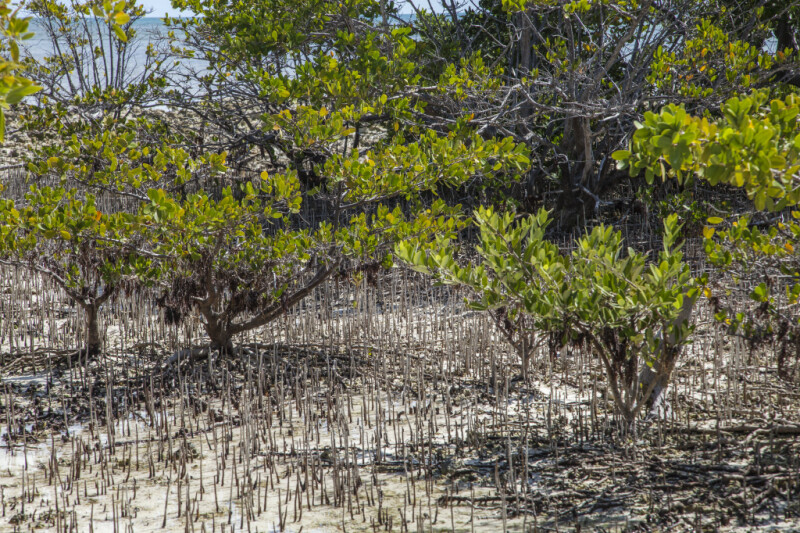
Carrion Mangroves are immobile, mutated Avicennia germinans which appear among, and nearly identical to their unmutated versions. Appearing as a 40'-60' tall mangrove tree with dark brown bark, elliptical, dark green leaves, and small creamy white flowers, their distinguishing feature is their long, underground system of roots and hundreds of pencil-like pneumatophores which grow upwards from the roots, appearing as a field of stakes. Decaying corpses may be noticed among the root system on a roll of 1-3 on 1d6.

This mutant tree doesn't actively hunt, but rather depends on its root system to deal with prey. Each Carrion Mangrove's root system covers a 100' diameter area around the tree. When prey is detected through ground vibrations, the nearest pneumatophores (roll 2D10 to determine number) shoot small poisonous thorns straight up into the prey doing 1d4 damage each. Each thorn has a Class 11 poison which causes paralysis for 2d6 rounds for each thorn which strikes the target. Victims that are paralyzed tend to fall directly onto 2d4 pneumatophores, causing 1d6 damage for each one struck, additionally, each pneumatophore pumps out the same Class 11 poison each round. Since these victims generally can't save against so many poison sources, they tend to be paralyzed until death from thirst or drowning. Carrion Mangroves feed on the blood and decaying bodies thus created.

These trees can be found just above the high tide line in the sandy or muddy regions around brackish water estuaries, lagoons, and mangrove swamps.

Mutations: Modified Vines and Roots (CotTW)


Hangman's Tree


No. Enc.: 1 (0)
Alignment: Chaotic
Movement: None
Armor Class: 3
Hit Dice: 9
Attacks: 4 (constrictive tendrils)
Damage: 2d6
Save: L5
Morale: None
Hoard Class: XIX
XP: 1700

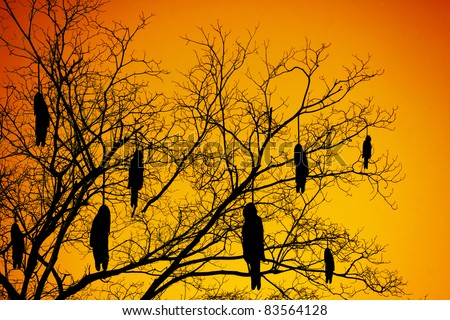
This tree is a mutated version of Carya texana appearing as a hickory tree 20-30' tall with dark grey bark covering a trunk roughly one foot in diameter, shiny, dark green leaves which turn golden-yellow in autumn, bronze-colored nuts, and yellow catkins.

Hangman's Trees attack by dropping 1d4 constrictive tendrils around prey. A successful attack roll achieves constriction, and the victim will suffer 2d6 damage on each consecutive round. The length of these tendrils ranges from 10’ to 20’.

They are typically found in hilly, forested regions. Their fruit is edible and considered tasty (see New Mutation - Edible Leaves)

Mutations: Prehensile Tendrils, Edible Fruit


Hellions


No. Enc.: 0 (2d10)
Alignment: Neutral
Movement: None
Armor Class: 7
Hit Dice: 4
Attacks: 1
Damage: 4d6
Save: L2
Morale: None
Hoard Class: None
XP: 290

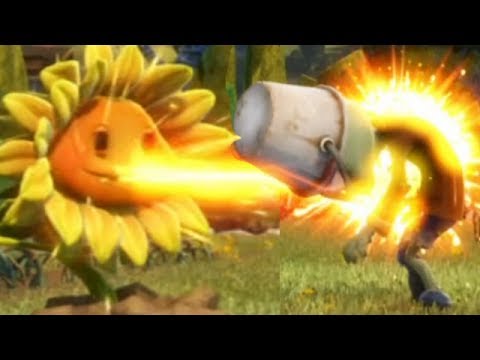
Hellions are mutant Helianthus annuus (sunflowers) that were failed bio-correcting solar collection plants, reflecting powerful beams of sunlight against nearby terrain as they track the sun across the sky. They appear as typical 10' tall sunflowers whose flowers actually track the sun's path across the sky. At frequent intervals (once every three rounds) during sunny days, they emit their stored solar energy at a spot up to 50' away. Often this results in only scorched ground, and the areas around Hellion fields are often scorched of vegetation making them easy to recognize. If any creature wanders into the area however, there is a chance that they may be struck by a beam (roll to attack any targets in the area with a -2 to the attack roll).

Mutations: Glow in the Dark (CoTW), Reflective Epidermis (Heat), Reflective Epidermis (Radiations), Thermal Emissions (Heat)

Friday, January 16, 2015

Freak Friday

Carnifolia


No. Enc.: 1 (0)
Alignment: Neutral
Movement: None
Armor Class: 2
Hit Dice: 10
Attacks: see below
Damage: see below
Save: L5
Morale: None
Hoard Class: XX
XP: 3800

These mutated, unintelligent Taxus brevifolia appear as 50' tall evergreen trees which have apparently rotted from the inside, creating hollow cavities which appear to be inviting places to shelter. With their brown, scaly bark, dark green, lanceolate leaves, and bright red, berry-like seed cones, these carnivorous predators are almost impossible to distinguish from normal trees. There is only a 1 in 6 chance that a creature will recognize a Carnifolia as such, although plant mutants can detect them on a 3 in 6 chance.

Carnifolia have two primary means of enticing creatures to rest within their tempting cavities. If any creature consumes the red seeds of the plant, they must make a saving throw vs poison or feel compelled to stop and rest within the cavity. Of course if the weather is inclement, the hollow cavity may also appear as an inviting place within which to shelter. Any creature which falls asleep within the hollow cavity will cause the cavity to close and begin filling with a digestive sap which oozes up from the roots, at a rate of one foot per round until the 10' cavity is filled. The digestive sap does 1d8 damage per round until the creature dies. The limited room inside the cavity prevents those trapped inside from attacking by any weapon except a dagger. Additionally, attacking from within the cavity is difficult, and the attack suffers a -4 penalty.

These tree predators can be found just about anywhere, although they will only be found near streams in drier regions.

Mutations: Carnivore, Edible Seeds (CotW), Energy Absorption (Electricity; CotW), Thermal Sensitivity (Fire)

Friday, January 9, 2015

Freak Friday

Baneboo


No. Enc.: 1d4 (1d4)
Alignment: Neutral
Movement: 90' (30')
          Fly: 240' (80')
Armor Class: 5
Hit Dice: 5+5
Attacks: 2 (bite or mutation, constrict)
Damage: 6d6/2d
Save: L3
Morale: 10
Hoard Class: XV
XP: 1460

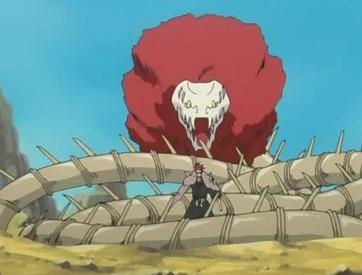
Designed as a bio-weapon by a certain demented bio-lab, best left forgotten, this strain of Phyllostachys rubromarginata has been turned into a ferocious predator. They appear as bamboo-like serpents some 30' long with a fanged, skull-like head and red ruff or mane. They fly by means of four delicate, leaf-like wings that contained under a protective layer of bark which acts similar to an insect's elytra. Primarily meat eaters, they generally prey on large game animals, but have been known to attack larger prey or humanoids. Additionally they are known to consume certain amounts of metal for unknown reasons.

Baneboo typically attack as if they were Giant Pythons, starting with a bite, and following up on a successful hit with a constricting attack that does an additional 2d4 hit points of damage. This constriction attack continues on ensuing rounds. When cornered, surprised, or seriously wounded, Baneboo are capable of spitting a poisonous gob up to 60' away. This gob is a Class 16 poison that causes death to targets unless a successful save vs poison is made, then the character takes 5d6 damage. Baneboo can spit a poisonous gob up to 3 times per day.

Habitually sheltering in caves or ruins found among wooded or forested areas, Baneboo are known to collect metallic objects and other valuables which they obtain by scouring ruins.

Mutations: Carnivore, Complete Wing Development (Elytra - see Wisdom from the Wastelands #40), Free Movement, Full Senses, Metallic Bark (see Creatures of the Wastes), Toxic Weapon

Monday, December 8, 2014

Mutant Monday

Ash Dragon


No. Enc.: 1d6 (2d6)
Alignment: Chaotic
Movement: 90' (30')
Armor Class: 6
Hit Dice: 3+3
Attacks: 3 or 1 (2 claws, 1 bite, or breath)
Damage: 1d6/1d6/1d8 or 2d10
Save: L2
Morale: 10
Hoard Class: None
XP: 310

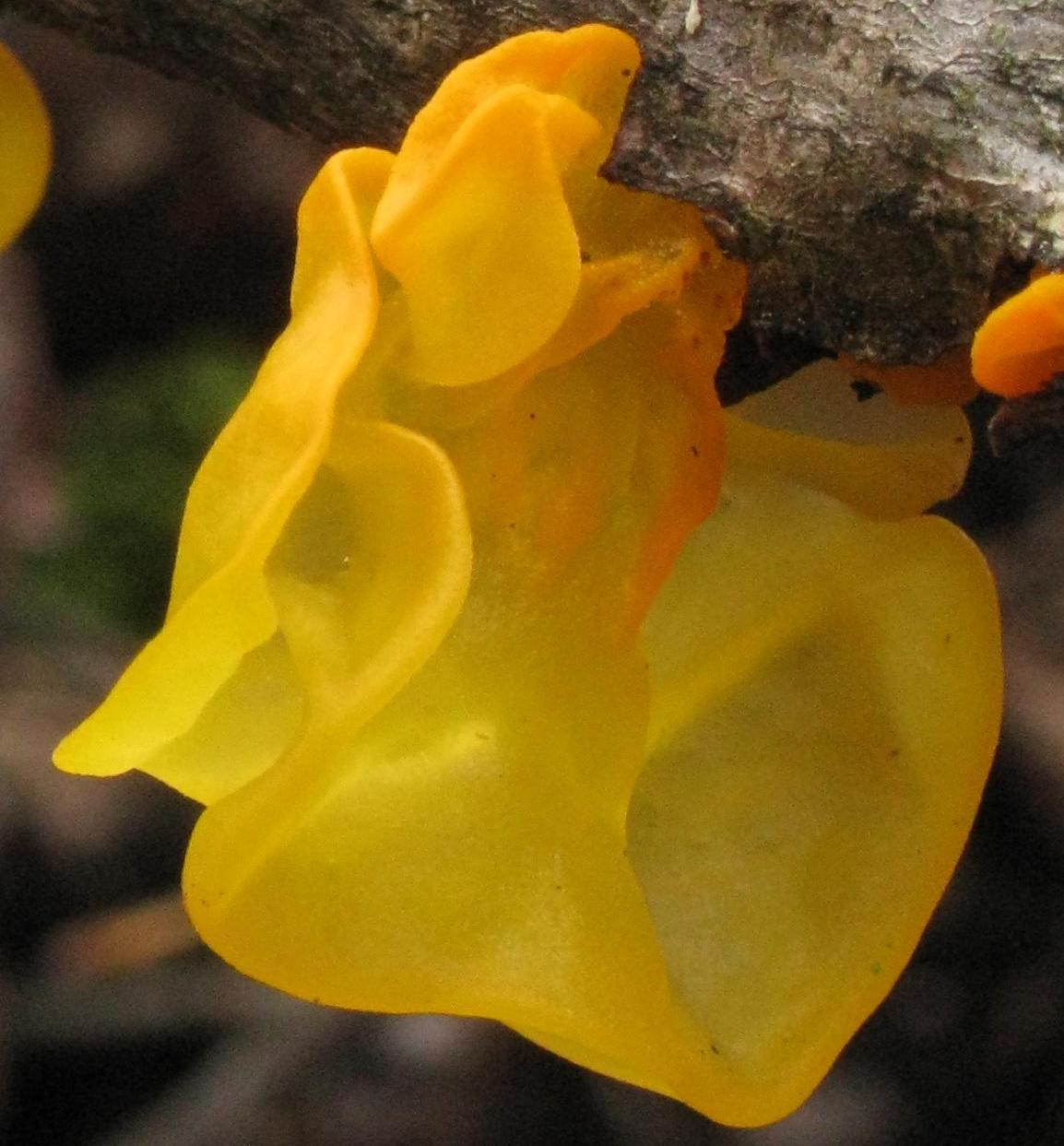
Mutated Morchella tomentosa that have become 2' long lizard-like creatures with ashen scales. These creatures abide near existing bodies of fire, among the ashes left.

While their primary diet is the ashes left by any burning conflagration, they can also consume meat from any animal. They prefer to attack any unwary visitors to their habitats by breathing their flame breath (2d10 damage up to 50') and then clawing or biting those that survive.

Ash Dragons are commonly found in ruins where fires have occurred, battlefields with burning wreckage, forests that have had recent forest fires, volcanic areas, and occasionally wasteland or desert regions.

Mutations: Reflective Epidermis (Heat), Energy Ray (Fire), Free Movement, Full Senses, Dietary Requirement Change (Ash) see CotTW, Thermal Sensitivity (Cold)

Monday, November 24, 2014

Mutant Monday

Here's a trio of ruin dwelling fun-guys to mess with your mutants.

Black Mold


No. Enc.: 1 (0)
Alignment: Neutral
Movement: None
Armor Class: 6
Hit Dice: 10
Attacks: 1
Damage: by mutation
Save: L5
Morale: None
Hoard Class: None
XP: 1700

Mutating from common Stachybotrys chartarum, this black gooey mass can be found in ruin corridors and rooms. It is typically 10’ to 30’ in diameter.

Coming into contact with a Black Mold releases an addictive substance. Anyone who releases this substance must make a save vs poison or become addicted to the toxin. Failure to make contact with a Black Mold once per day results in withdrawal symptoms that act as a Class 6 Poison that acts for each day without contact.

Black Mold is only damaged by fire and other energy attacks. If a black mold is attacked with other weapons, it splits into more individuals of reduced mass. Every successful attack creates a smaller mold that has 2 HD.

Mutations: Toxic Weapon, Narcotic


Fission Yeast


No. Enc.: 1 (0)
Alignment: Neutral
Movement: None
Armor Class: 8
Hit Dice: 5
Attacks: 1
Damage: see below
Save: L3
Morale: None
Hoard Class: None
XP: 350

Fission Yeast is a mutated strain of Schizosaccharomyces pombe that produces radiation. A fully grown fission yeast generates a Class 5 Radiation field for 50' around it. Immune to all attacks except electrical-based ones, Fission Yeast are known to split into smaller yeasts when attacked with weapons. Each of these smaller yeasts generate a Class 2 Radiation field for 25' around them.

Mutations: Toxic Weapon


Gold Fungus


No. Enc.: 1 (1)
Alignment: Neutral
Movement: 10' (3')
Armor Class: 8
Hit Dice: 3
Attacks: 1
Damage: 2d6
Save: L2
Morale: 12
Hoard Class: None
XP: 65

Gold Fungus is a mutant fungus that can grow to a diameter of up to 10 feet, and a thickness of about 6 inches. It resembles gold sheeting. A gold fungus strikes like a snake, slamming opponents with its body. A successful strike allows the gold fungus to cling to an opponent. When clinging to an opponent, the gold fungus will use its Possession power to try and take over the victim. Gold Fungus is immune to the effects of fire-based and cold-based attacks. They take normal damage from electrical-based attacks and weapons.

Mutations: Possession

Monday, November 10, 2014

Mutant Monday

Dark Bramble


No. Enc.: 2d4
Alignment: Neutral
Movement: None
Armor Class: 9
Hit Dice: 2
Attacks: 1
Damage: by mutation, or see below
Save: L1
Morale: None
Hoard Class: None
XP: 56

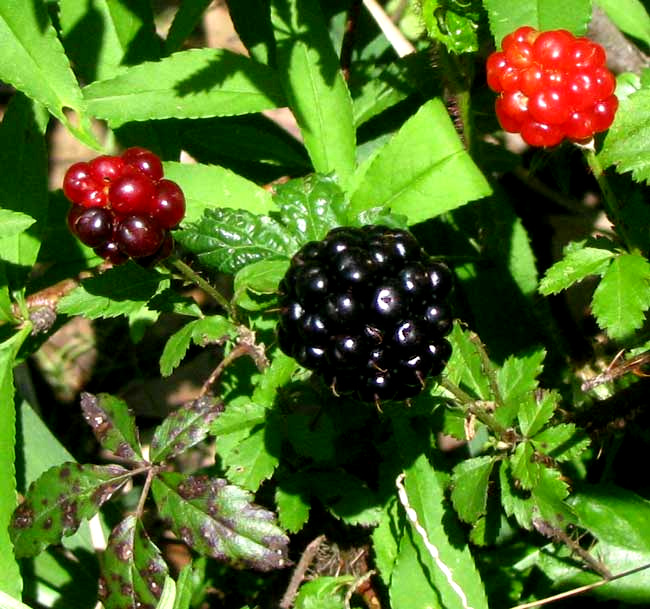
A species of unintelligent, mutated Rubus flagellaris (Common Dewberry) that range from 8 to 15 feet long, up to four feet high. The main body consists of a woody taproot with 4d4 low growing stems which have hard prickles that can cut unprotected flesh, doing 1d4 damage to those who come into physical contact with the plant. The stems are covered in green leaves that are pale on the underside and form an alternate compound arrangement of three to five leaflets. Also present are white, five-petaled flowers which open during the day and close at night. Lastly, the aggregate fruit of this plant consists of 3d6 dark purple berries per stem which resemble blackberries.

To someone unfamiliar with the Dark Bramble, the plant looks much like any other bramble. This makes them surprisingly difficult to distinguish from normal brambles, at a distance of more than 10 yards, surprising beings on a surprise check roll of 1-3 on 1d6. Because of their body form, blunt or piercing weapons (including projectiles) cause but a single point of damage on a successful attack. Whereas slashing weapons, fire, or other attack forms generally have their normal effect. Dark Bramble attack with their Disintegration mental mutation when humanoids approach within 50 feet.

These plants grow in a variety of soils and are found in bogs, savannahs, sandy regions, abandoned files, meadows, and woodland borders. They survive and repopulate by attracting animals such as chipmunks, mice, racoons, squirrels to eat their berries as well as a large variety of aphids, bees, and butterflies. While a nuisance plant, their leaves, unlike their inedible berries, can be used to make delicious teas or eaten raw.

Mutations: Disintegration, Full Senses, Edible Leaves (NEW), Inedible Berries (Inedible Fruit from Creatures of the Wastes)

New Mutation (Beneficial Plant Mutation)
Edible Leaves
This power functions similar to the Edible Seeds mutation from Creatures of the Tropical Wastes, and should probably include Edible Bark as well. There are also some new additions to the list of effects:
Roll Effect
9 (replaces old 9-10 option) Tasty, acts as one ration of food.
10 (replaces old 9-10 option) Nutritious, acts as full day's worth of food.
11 Sugary Energy, restores CON to normal for 1d4 hours, or reduces Fatigue by one step (if used).
12 Disease Vaccine, randomly roll type of Disease cured.
13 Narcotic (depending on what rules for drugs are used).
14 Booze (depending on what rules for drugs are used).
15 Meat Substitute, acts as a normal ration of food for carnivores.
16 Poison Antidote, randomly roll type of poison cured.
17 Radiation Antidote, 1/2 damage from any radiation during that day.
18 Energy Absorption, (randomly rolled) for 1d4 hours.
19 Epidermal Photosynthesis for 1d6 hours.
20 GM's Choice

Monday, October 27, 2014

Mutant Monday

Grass Devil


No. Enc.: 1d4 (1d4)
Alignment: Chaotic
Movement: 90' (30')
Armor Class: 5
Hit Dice: 6
Attacks: 2+ (bite, weapon) see below
Damage: 1d8, poison/by weapon/see below
Save: L3
Morale: 8
Hoard Class: XIX
XP: 2120

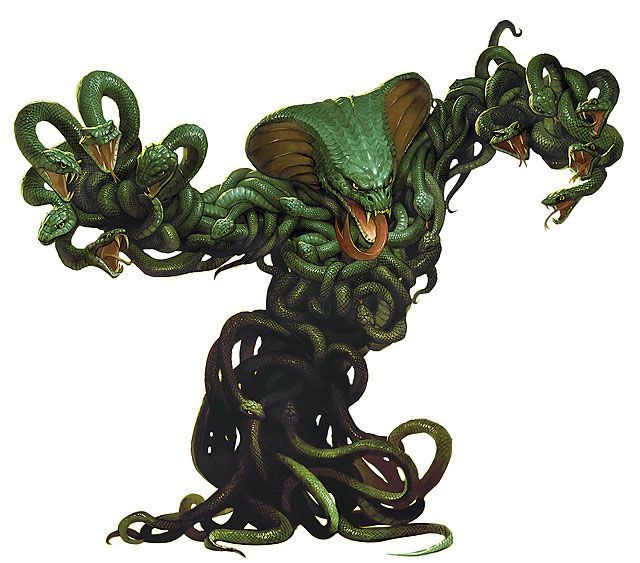
This grass mutation of the species Saccharum ravennae generally appears as a green snake-humanoid hybrid. Typically they take the form of a four-foot tall, serpent-headed humanoid with a serpentine tail. There are some variations in each Grass Devil however, roll twice on the following table to determine which serpent-like mutations the Grass Devil possesses:
RollFeatureEffect
1Cobra hoodToxic Weapon (Spray Poison), replaces bite attack.
2Flexible torsoThe mutant can go through any hole or space he can fit his head through.
3Tendril tail instead of legsMoves at 120' (40').
4Camouflaged leaf patternMore difficult to spot, surprising beings on a surprise check roll of 1-3 on 1d6.
5Carnivorous tendrils instead of armsAdds 2d3 carnivorous mouths (1d4 damage) at the end of flexible tendrils where each arm would be. Cannot manipulate weapons or objects. Attacks increase to 3 (bite, arm bite, arm bite).
6Constrictive tendril tail instead of legsA 3d6 damage constrictive tendril. Cannot manipulate weapons or objects. Attacks remain at 2, but can use constriction instead of bite or weapon.
7Constrictive tendrils instead of armsA pair of 1d6 damage constrictive tendrils that can manipulate objects and wield weapons.
8Constrictive tail tendril in addition to legsA 2d6 damage constrictive tendril. Cannot manipulate weapons or objects. Attacks increase to 3 (bite, constrict, weapon).


Grass Devils are violently opposed to mammalian life and attack it whenever possible. Intelligent and cunning, Grass Devils fight from ambush, create and utilize traps, and seek to use terrain to their advantage. With their Quick Mind mutation, they are quite adept at figuring out and using technological artifacts and almost always possess one or more objects, typically weapons. In addition to whatever weapons they may possess, they also have a class 12 poisonous bite (or poisonous spit if they have the Cobra hood mutation).

Grass Devils inhabit ruins in swamps, rain forests, and jungles. They typically lair in single level buildings, or buildings with "handicap access" ramps.

Mutations: Animal Limbs (arms)*, Full Senses, Free Movement, Toxic Weapon (poison bite)**, Carnivore, Quick Mind
*Animal Limbs (arms) may be replaced by carnivorous or constrictive tendrils.
**Toxic Weapon (poison bite) may be replaced by spray poison.